Back in 2022, a simple question to members of the Long Beach Historical Society led unexpectedly to the digital resurrection of the Lido Springs Par-3, a short-lived golf course that sits abandoned beside the municipal Lido Golf Course. Local golfers might know it as the wooded area with old light stanchions next to #12 on Lido’s eastern edge.
Peter Flory, one of the main drivers behind the real-life rebuild of The Lido at Sand Valley, put his tech skills to use four years ago to help Golf On Long Island bring Lido Springs back to life. (Flory’s role and digital process is described in more detail in the original 2022 Lido Springs post.) GOLI’s small collection of Lido Springs newspaper articles and advertisements framed out the course’s brief history, and interviews with locals who spent time at the course a half-century ago helped color in all the black-and-white photos and newsprint.
What makes Lido Springs so unique is that the course layout and ground contours remain fully intact beneath overgrowth more than 40 years since its last golf ball was struck. Flory was able to verify this using the same LiDAR technology that helped him design the digital replica that inspired the rebuild of Sand Valley’s Lido.
Now, after a few years of tech advancements, Flory last week sent over new images of Lido Springs — a more detailed aerial view of the layout and a new rendering of #1 green with textures and shadows that resemble the real thing.
“It could be one of the best par-3 courses in the country, especially given it’s location,” Flory says.
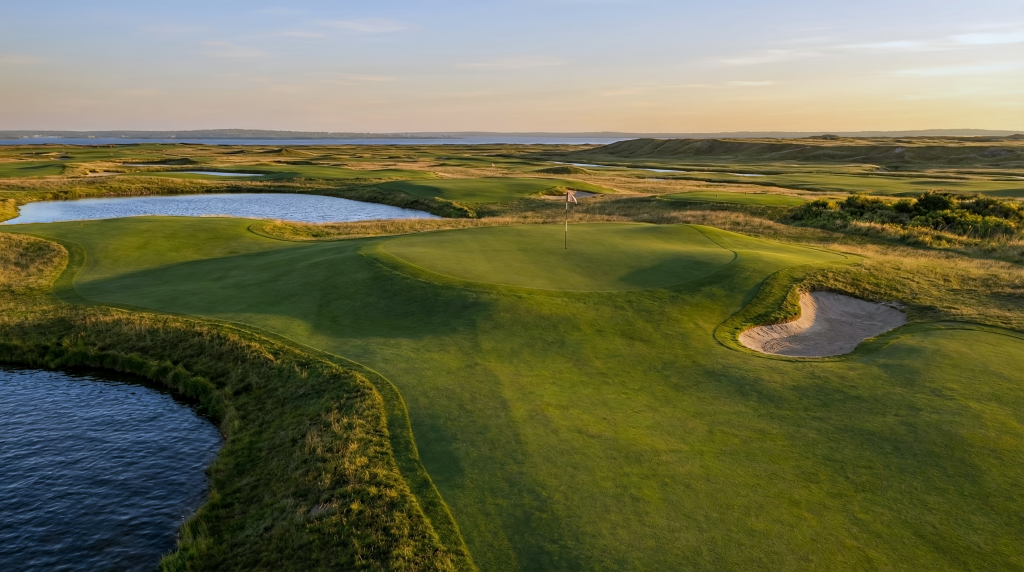
Seen in the newly created rendering above, Lido Springs’ first hole pointed north from Lido Boulevard toward the center of the property. Flory’s measurements and 1960s newspaper descriptions confirm the hole was close to 80 yards long with a small pond (one of five on the course) at front left. In the background is Reynolds Channel; behind #1 green is the tee for #8, where shots went over another small pond toward the visible flagstick in the distance.
Lido Springs was, according to news accounts, designed by prominent architect William Mitchell, which might explain why the course had such interesting green complexes for the type of pitch-and-putt that offered mini golf and an arcade. “I love the small, elevated target here,” Flory says. “It’s so dicey. You could keep the greens pretty slow to make it fair.”
Also visible in the background (top right) is a berm where Lido Beach’s Nike missile site was located.
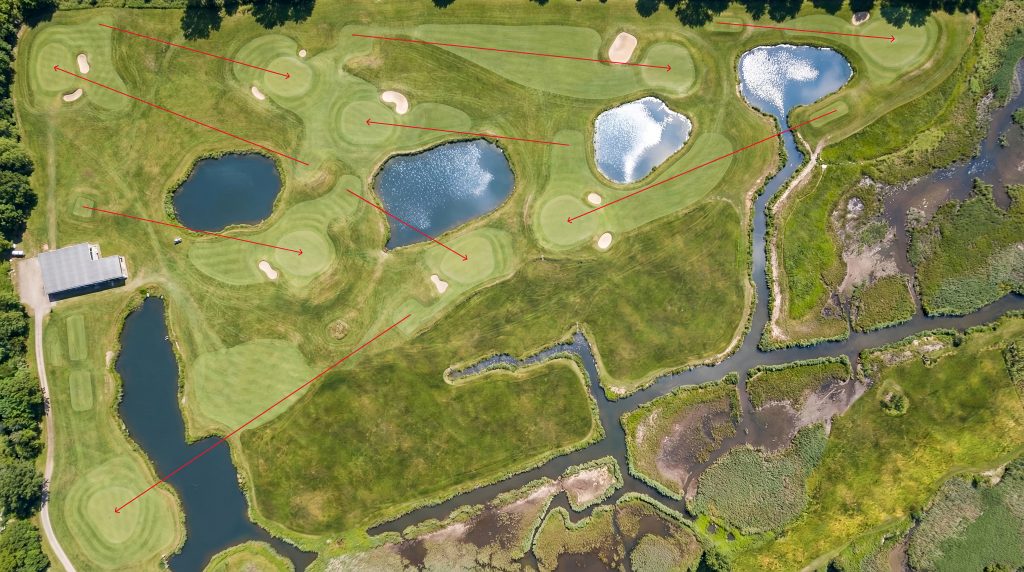
Shaped like a slice of pizza and covering a mere 10 acres, Lido Springs featured several water carries and about a dozen bunkers. It also offered night golf, and for at least a few years during the ’60s and ’70s, it stayed open for play until midnight. In the newly rendered routing below, the ninth hole is at bottom left, where the shot to the green required a full water carry. Behind the green, though not included in this image, was a fence that separated the course from Lido Boulevard.
Lido Springs closed in the early 1980s and left behind a golf course that’s been untouched for four decades, along with the light poles that illuminated it on many summer nights. Driving on Lido Boulevard today, you can still see sections of fence and several light stanchions above the tree line.
See the original 2022 post for more on this history and development of Lido Springs:
Resurrecting long-lost Lido golf — the Lido Springs Par-3 course
The digital renderings published here are the intellectual property of Peter Flory.